Site Reputation Abuse Enforcement Expanded (February 2026)
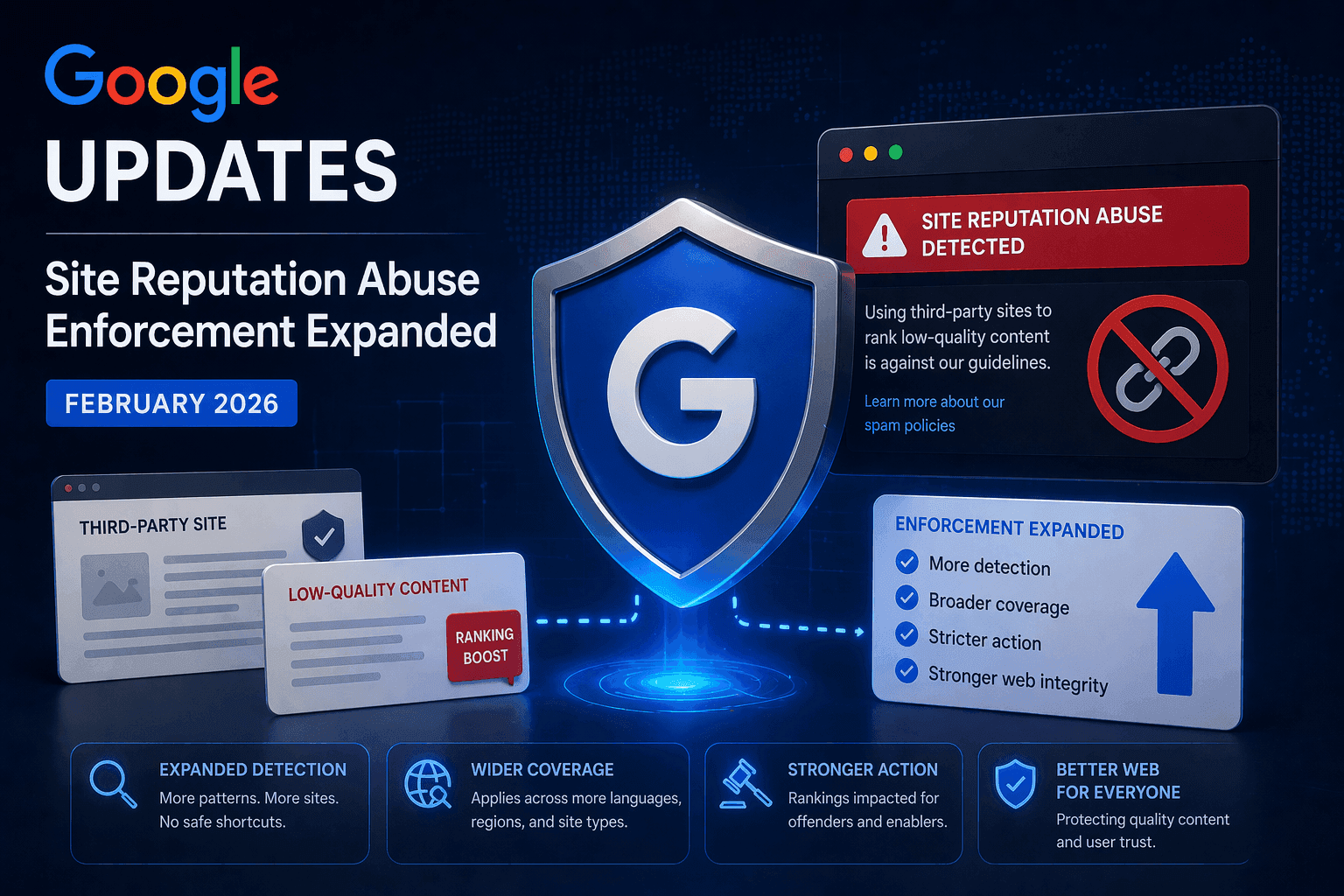
Google significantly expanded its algorithmic enforcement of the site-reputation-abuse policy. Pages hosting third-party or affiliate-heavy content on authoritative domains now lose the domain's ranking authority and compete on their own merit.
[spam update · severity: high]
On February 3, Google confirmed that it had significantly expanded the algorithmic enforcement of its site-reputation-abuse policy — often called 'parasite SEO' in the industry. The move builds on the manual actions that began in May 2024 and automates the ranking demotion for affected sections at scale.
What changed
Previously, Google relied on manual reviews to flag site-reputation abuse on news, university and government domains. Starting February 3, an algorithmic system identifies third-party sections of an authoritative site and evaluates them independently — as if they were a separate standalone site. Pages that ranked purely on the host's authority no longer receive that boost.
Who was affected
- Coupon and discount code sections hosted on news sites (USA Today, Forbes, CNN, etc.)
- "Best of" review sections on publishers that clearly don't do the testing in-house
- Educational "learn about X" pages on university domains that promote commercial products
- Any third-party content published with minimal editorial involvement from the host publisher
What Google officially said
From the updated Search Central guidance: 'Third-party content published with little first-party involvement for the primary purpose of manipulating search rankings is site reputation abuse.' Google is explicit that the intent — not the technical implementation — is what matters. Moving content to a subdomain does not exempt it.
What to check on your site
- Do you host third-party content (guest posts, agency-produced reviews, coupon feeds) under your domain or subdomain?
- Is that content reviewed by your editorial team before publication, or syndicated wholesale?
- Does the third-party section use your site navigation, branding and authority signals to rank?
- Are the monetisation incentives aligned with your audience's interests?
What we recommend
If you're a publisher monetising third-party content: start with disclosure. Make the third-party relationship obvious to users and Google (separate navigation, clear 'advertiser content' labels, no-index if quality is low). If you're a brand buying placement on news sites as a ranking shortcut — that strategy is now materially riskier. Budget for first-party content on your own domain instead.