Google June 2026 Spam Update Complete: What Website Owners Need to Know
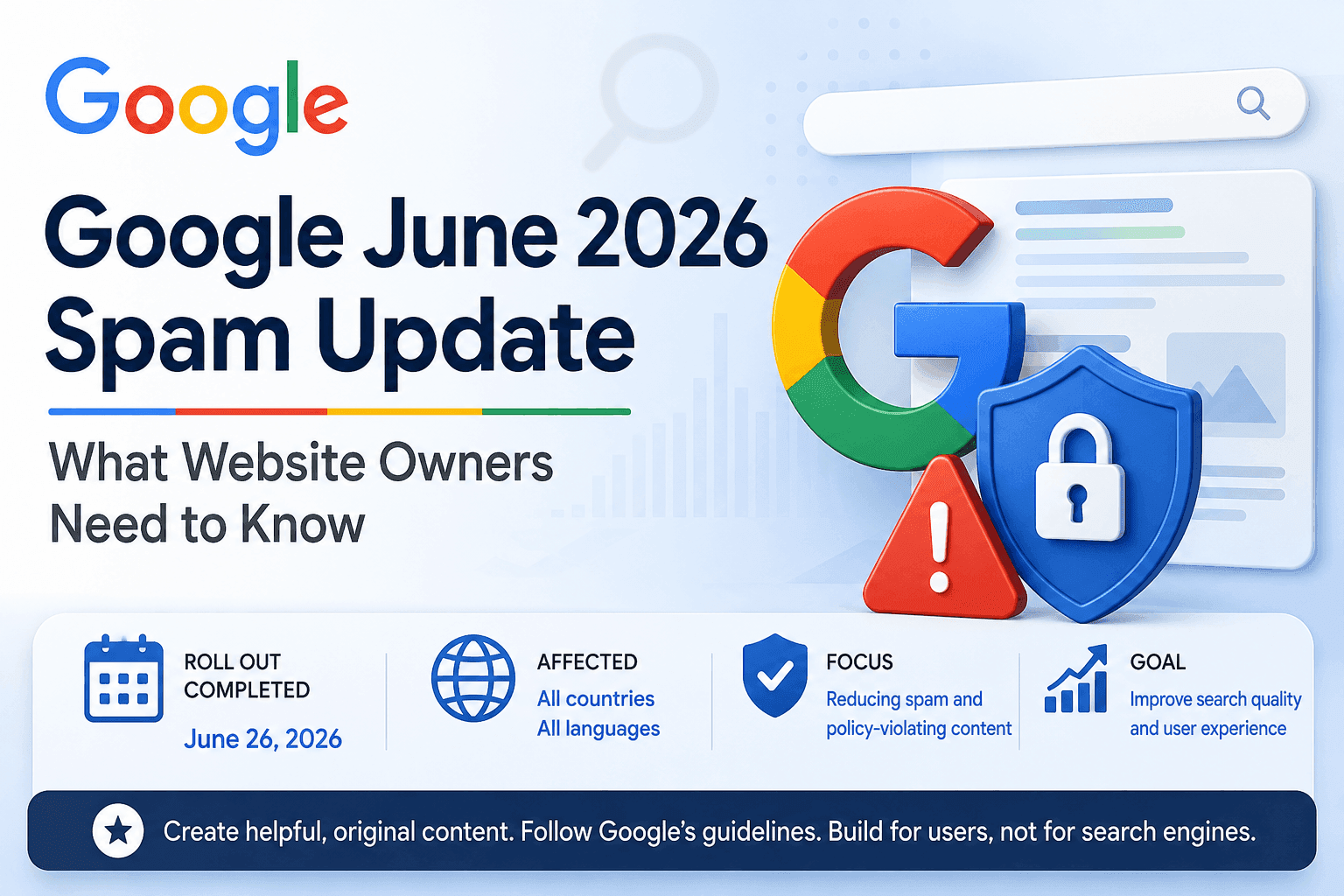
Google has officially completed the rollout of its June 2026 Spam Update, a global algorithm update designed to improve search quality by reducing spammy content in search results. The update started on June 24, 2026, and finished on June 26, 2026, taking approximately two days to fully deploy across all regions and languages. Unlike Google's Core Updates, Spam Updates specifically target websites that violate Google's spam policies rather than rewarding better content directly. If you've noticed significant ranking changes over the last few days, this update may be the reason.
Timeline
- Rollout started: June 24, 2026 (09:03 PDT)
- Rollout completed: June 26, 2026 (10:58 PDT)
- Affected: All countries and all languages
- Type: Google Spam Update
What Is Google's Spam Update?
Google periodically releases Spam Updates to identify and reduce the visibility of websites that attempt to manipulate search rankings through practices that violate Google's Search Essentials.
These updates are separate from Core Updates and focus specifically on spam detection.
Examples of issues that may be affected include:
- Automatically generated or AI-generated content created solely for rankings
- Thin or low-value pages
- Cloaking and deceptive redirects
- Keyword stuffing
- Link spam and paid link schemes
- Hidden text or hidden links
- Expired domain abuse
- Scaled content created without providing value
- Doorway pages
- Hacked or compromised websites
The objective is simple: reward helpful websites while reducing the visibility of manipulative ones.
Who Is Affected?
Not every website will notice ranking changes.
Generally, websites that follow Google's Search Essentials and publish original, helpful content should not be negatively impacted.
Sites relying on aggressive SEO tactics, mass-produced pages, or artificial backlink strategies are the most likely to experience traffic declines.
How to Check If Your Website Was Hit
If your rankings or traffic changed between June 24 and June 26, review:
- Google Search Console impressions and clicks
- Organic traffic in Google Analytics
- Keyword ranking fluctuations
- Indexed pages
- Manual Actions report in Search Console
A sudden drop affecting many keywords at once can indicate that the Spam Update impacted your site.
What You Should Do
If your website lost rankings:
1. Audit Your Content
Remove or improve:
- Thin articles
- Duplicate content
- Auto-generated pages
- Outdated content with little value
Focus on publishing information that genuinely helps users.
2. Review Your Backlinks
Look for:
- Paid links
- Spammy directories
- Private Blog Networks (PBNs)
- Large numbers of low-quality backlinks
Google continues improving its ability to ignore or devalue manipulative link schemes.
3. Improve Technical SEO
Ensure:
- No hacked pages
- No hidden redirects
- Proper canonical tags
- Clean site architecture
- Fast loading pages
- Mobile-friendly design
4. Follow Google's Search Essentials
Google recommends focusing on long-term quality rather than chasing algorithm changes.
Build websites for users first—not search engines.
Will Rankings Recover?
Yes—but only if the underlying issues are fixed.
Spam Updates generally do not recover immediately after changes are made. Improvements are often recognized during future crawls and algorithm evaluations, which may take weeks or months.
Trying to "reverse engineer" the update usually isn't productive. Instead, focus on creating trustworthy, original, and useful content.
Key Takeaways
- The June 2026 Google Spam Update is now fully rolled out.
- It affects all languages and countries.
- The rollout lasted roughly two days.
- Websites using spam techniques may experience ranking losses.
- High-quality websites following Google's guidelines should generally remain unaffected.
- If you experienced traffic declines, review your content quality, backlink profile, and technical SEO before making major changes.
Final Thoughts
Google continues refining its ability to detect spam and reward genuinely helpful websites. While algorithm updates can cause short-term volatility, the long-term strategy remains unchanged: create original, trustworthy content, maintain a technically sound website, and avoid shortcuts that violate Google's guidelines.
If your site was affected by the June 2026 Spam Update, treat it as an opportunity to improve overall quality rather than searching for quick fixes. Long-term, user-focused SEO remains the most sustainable path to stable search visibility.